
A "Generational" Peak In Corporate Profit Margins
By Tyler Durden
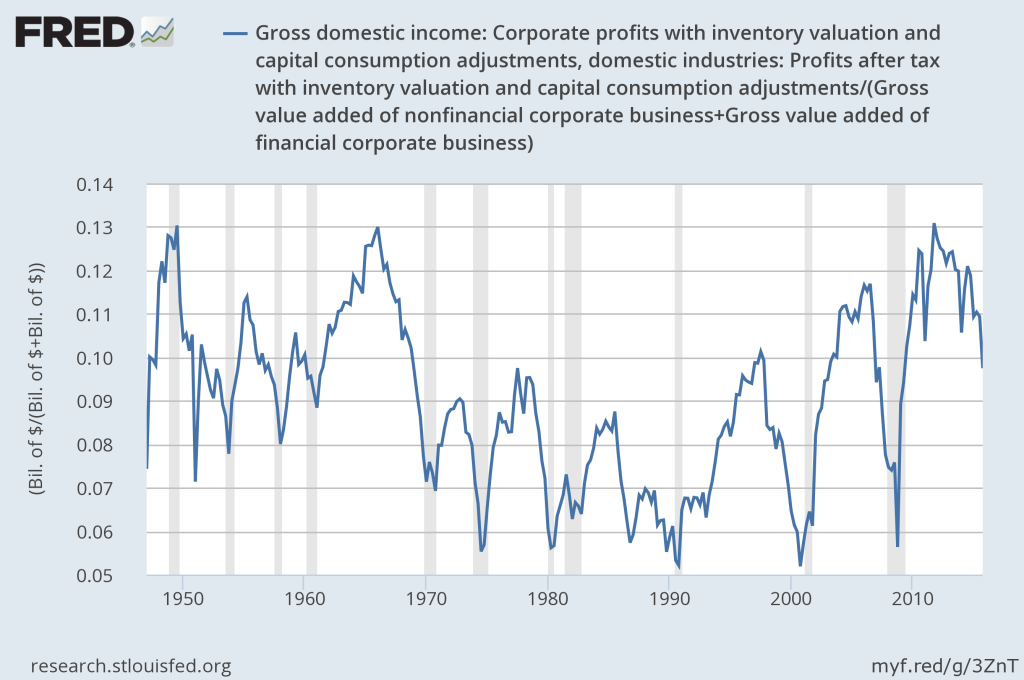
To the point of mean reversion in profit margins, in the past I have referenced the words of a pair of investment legends. Jeremy Grantham has called profit margins, “the most mean-reverting series in finance.” And back in 1999, Warren Buffett explained why:
In my opinion, you have to be wildly optimistic to believe that corporate profits as a percent of GDP can, for any sustained period, hold much above 6%. One thing keeping the percentage down will be competition, which is alive and well. In addition, there’s a public-policy point: If corporate investors, in aggregate, are going to eat an ever-growing portion of the American economic pie, some other group will have to settle for a smaller portion. That would justifiably raise political problems—and in my view a major reslicing of the pie just isn’t going to happen.
Both of these two gentlemen clearly believe, and very strongly, that corporate profit margins have an equilibrium. They can rise above or fall below that equilibrium but the very nature of capitalism, along with its social contract, will force an inevitable reversion to the mean.
I believe there are three major factors behind the recent bubble in corporate profit margins.
First, and most obvious, is the simple trend in interest rates over the past 35 years or so. As rates have fallen to lows not seen in many generations, debt has become much less costly, especially when you also consider that corporate spreads on top of these ultra-low rates have also fallen to ultra-low levels.
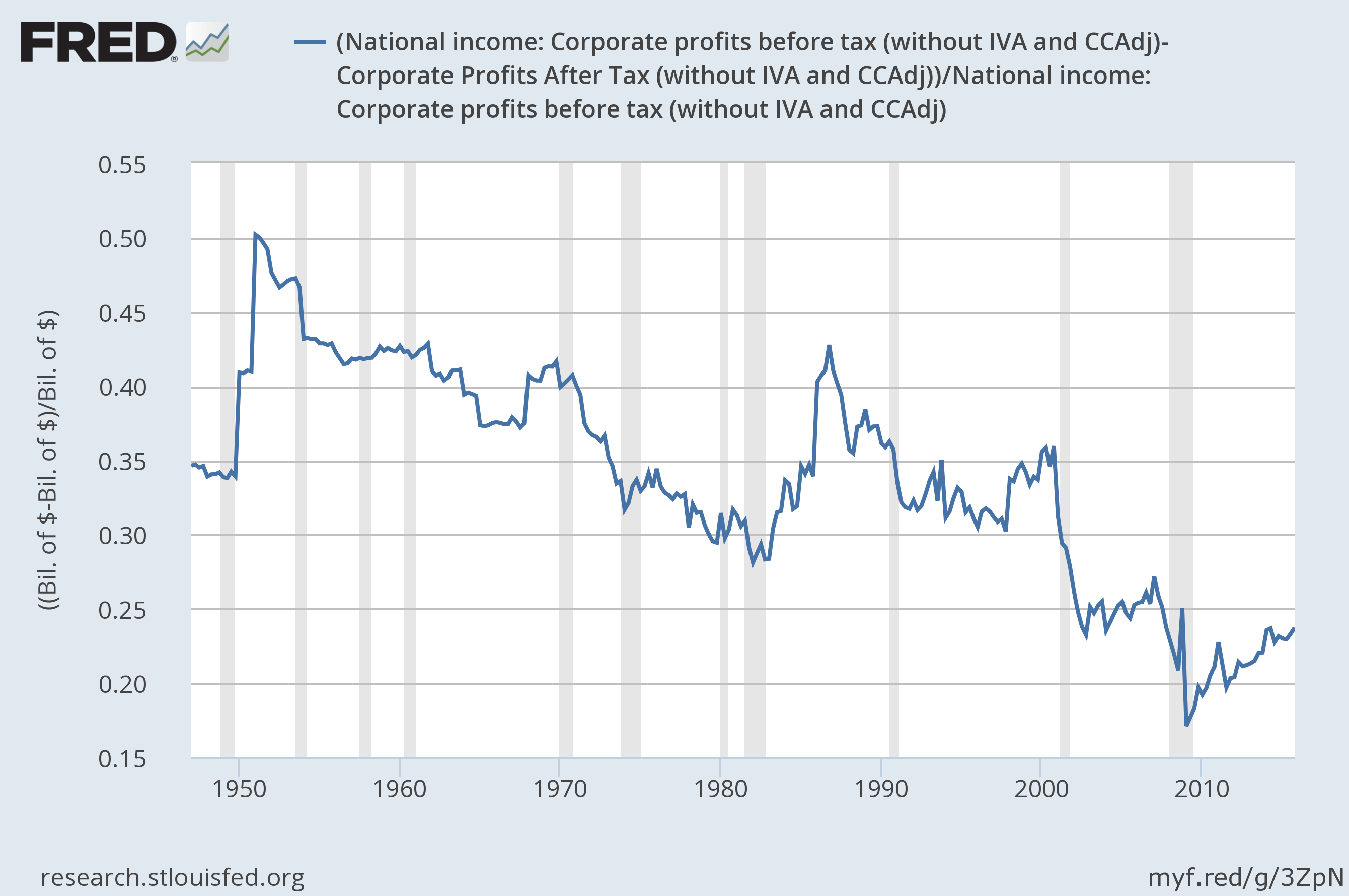
Second, corporate taxes as a percent of income have been falling for a long time, as well. Recently, this may be due in large part to the growth of tax avoidance strategies, mainly those involving relocating corporate headquarters to tax havens.
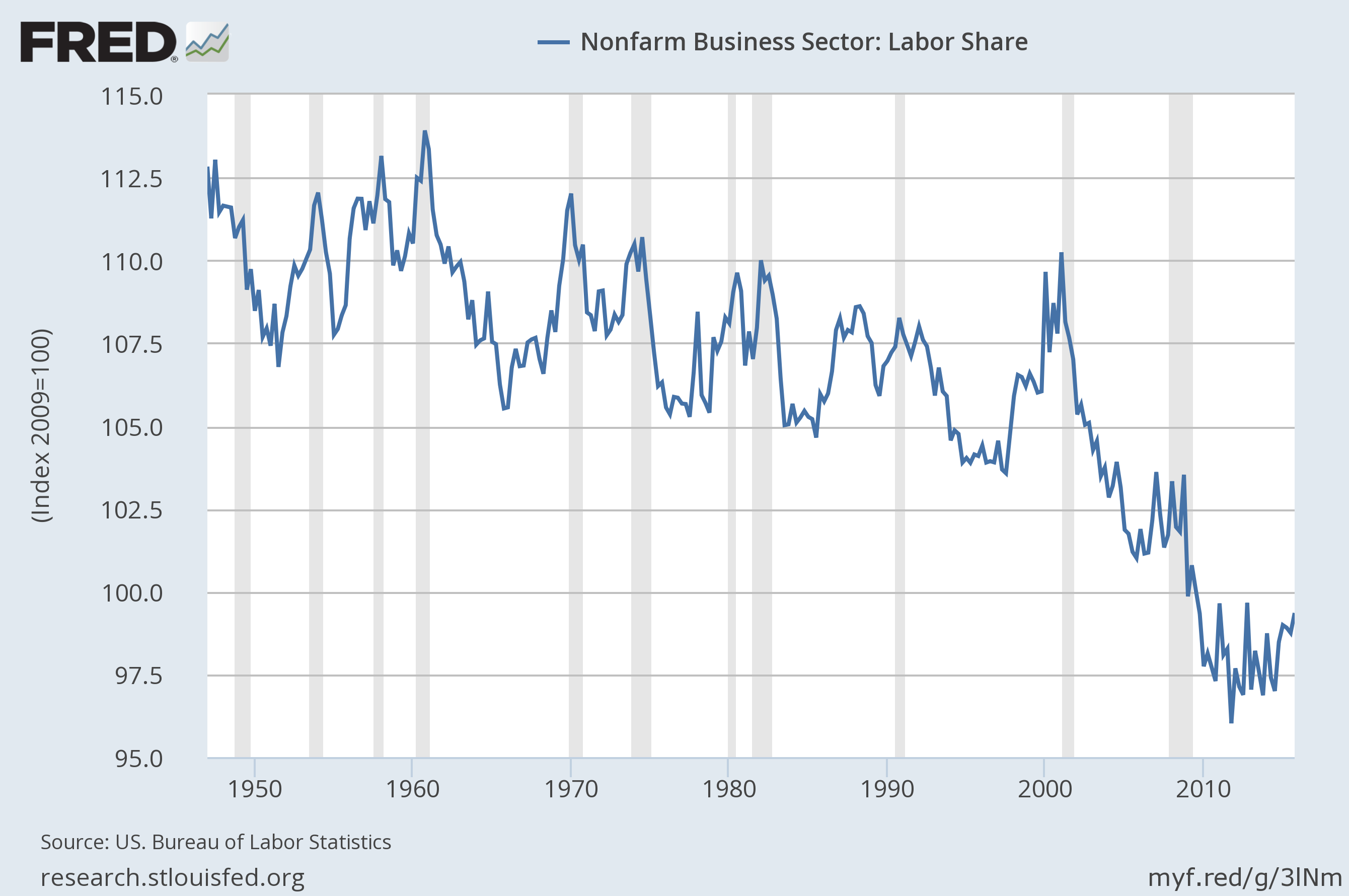
Third, labor costs have also been falling for quite some time. Much of this may be due to the trend toward automation and, perhaps far more so, the offshoring of labor over the past several decades. This falling corporate cost is very apparent in the labor share of income numbers that many have discussed recently, including Paul Tudor Jones.
These three secular trends have provided a tailwind for profit margins for a long time now. However, they may be reaching, or have already reached, their full potential and begun reverting. In terms of interest rates, the Fed Funds rate has essentially been stuck at zero for seven years now. Corporate spreads hit rock bottom almost two years ago and have been reversing course ever since. Furthermore, after a long period of deregulation in the banking industry that saw lending standards loosen considerably, it appears that regulation is making a sustained comeback and the effect will likely be just the opposite.
Politically, …read more
Source: A "Generational" Peak In Corporate Profit Margins


