China hits GM joint venture with $29M fine

Chinese regulators have fined GM’s local joint venture the equivalent of $29 million, saying it broke antitrust rules. …read more
Source: China hits GM joint venture with $29M fine


Chinese regulators have fined GM’s local joint venture the equivalent of $29 million, saying it broke antitrust rules. …read more
Source: China hits GM joint venture with $29M fine
By Tyler Durden

Shortly after last night’s news that Deutsche Bank had settled with the DOJ for $7.2 billion, of which it would pay $3.1 billion in a civil penalty, far lower than the $14 billion number initially speculated (the stock popped as much as 4% before settling just over 2% higher currently), Credit Suisse likewise closed the books on its pre-crisis RMBS fraud when the largest Swiss bank agreed to pay $5.28 billion to resolve a U.S. investigation into its business in mortgage-backed securities. Credit Suisse will pay a $2.48 billion civil penalty and $2.8 billion in relief for homeowners and communities hit by the collapse in home prices, it said in a statement Friday. Credit Suisse will take a pretax charge of about $2 billion in addition to its existing reserves during the fourth quarter.
The two settlements follow a surprise announcement by the DOJ which said on Thursday it sued Barclays Plc for fraud over its sale of mortgage bonds after the bank balked at paying the amount the government sought in negotiations. The lawsuit announced on Thursday is rare for big banks, which typically settle with the government rather than risk drawn-out litigation and a possible trial.
“With this settlement, the largest remaining major uncertainty is now eliminated” for Credit Suisse, Peter Casanova, an analyst at Kepler Cheuvreux told Bloomberg. “This is good news.”
The Obama administration is pressing to wrap up investigations of Wall Street firms for creating and selling the subprime mortgage bonds that fueled the 2008 financial crisis. Before the two deals on Friday, authorities had already extracted more than $46 billion in fines from six U.S. financial institutions over their dealings in mortgage-backed securities. Bank of America Corp., which had the largest such settlement, agreed to pay $16.7 billion over bonds that were worth four times those of Deutsche Bank. Meanwhile, Deutsche Bank said that the fine will cut its pretax profit by $1.2 billion this quarter as the firm taps existing legal reserves to blunt much of that cost.
Credit Suisse said it would pay the consumer relief over five years following the settlement. The bank had set aside about 2.1 billion francs ($2.1 billion) in general litigation provisions by the end of the third quarter.
Chief Executive Officer Tidjane Thiam tapped shareholders for 6 billion Swiss francs in late 2015 while shifting the company’s focus away from capital-heavy investment banking toward wealth management. Thiam has updated investors twice on his plan, which includes a partial initial public offering of its Swiss unit in late 2017. In December, the former insurance executive pledged more cost cuts and lowered targets for the international wealth management and its Asian unit.
As Bloomberg adds, the Swiss bank remains under Justice Department scrutiny over its handling of U.S. clients in Israel. The department fined Credit Suisse $2.6 billion in 2014 for helping Americans dodge taxes in Switzerland. The bank is also a target of several antitrust cases in the U.S., including class actions related to foreign-exchange rates and interest-rate swaps.
At …read more
Source: Credit Suisse Settles With DOJ For $5.3 Billion; Will Pay $2.5 Billion Civil Penalty
By Tyler Durden

As a new Trump administration prepares to enter the White House, after months of promises to crack down on illegal border crossings, new data emerges that seemingly confirms that the citizens in Mexico and Central America have taken him at his word. As data from the PewResearchCenter confirms, there has been a surge in illegal border crossings in October and November with the apprehension of people traveling as a family unit up 130% YoY.
As the chart below highlights, the total number of illegal migrants apprehended at the U.S.-Mexico border in October and November 2016, including those traveling alone, was nearly 40% higher than any other year out of the past 5.
As Pew points out, apprehensions typically spike in the spring and summer months before dipping in the late summer, fall and winter months but 2016 bucked that trend as people rushed to beat the Trump inauguration.
In the 2016 fiscal year (Oct. 1, 2015 to Sept. 30, 2016), there were 408,870 total apprehensions at the Southwest border, up from 331,333 apprehensions in fiscal 2015. Historically, the number of apprehensions has spiked in the spring and early summer months, before dipping in the late summer, fall and winter months. But in fiscal 2016, apprehensions rose in August and September, with monthly totals that approached the highs of April and May.
Pew also notes that the apprehension of Central Americans exceeded that of Mexicans for just the second time in history. Meanwhile, the Los Angeles Times also reported that 15,000 non-Latin American migrants, primarily Haitians, Africans and Asians, passed through the Mexican state of Baja California in 2016, a fivefold increase from 2015.
Also in fiscal 2016, apprehensions of Central Americans exceeded that of Mexicans for just the second time. This first occurred in 2014, when there was a record surge in apprehensions of unaccompanied children and families, mostly from El Salvador, Honduras and Guatemala. Apprehensions dropped in 2015 due in part to increased immigration enforcement by the Mexican government at its southern border and internally, which made it more difficult for Central Americans to travel through Mexico to reach the U.S.
Of course, as we noted yesterday (see “Mexican Ambassador To U.S. Urges Illegals To Apply For Citizenship Before Trump Takes Office“), for those who are successful in crossing the border illegally, the Mexican Ambassador to the U.S. has a great plan for how you can avoid deportation. In fact, Ambassador Carlos Sada Solana has even expanded the hours of Mexican consulates in the United States to “better provide information and assistance” to concerned migrants ahead of Trump taking office on January 20th. Something tells us that this Ambassador isn’t going to be a great fit for the Trump administration.
By Tyler Durden

Nearly a decade ago, Warren Buffett bet Protege Partners, a fund of hedge funds, that over the course of 10 years the S&P would outperform Protege’s returns net of all fees, costs and expenses. To make it real, the loser agreed to pay $1 million to the charity of the winner’s choice.
At this past year’s annual meeting, Warren Buffett provided an update on the now 8-year-old bet and, sure enough, the S&P has obliterated Protege’s net returns by over 40%, on a cumulative basis.
Buffett referred to the bet as the “most important investment lesson in the world.”
“I believe this is the most important investment lesson in the world.”
“[Losing by 40 points] may sound like a terrible result for the hedge funds, but it’s not a terrible result for the hedge fund managers. If you have a couple percentage points sliced off every year, that is a lot of money … It’s a compensation scheme that is unbelievable to me and that’s one reason I made this bet.”
“It’s so obvious and yet all the commercial push is telling you you ought to do something different today than you did yesterday. You don’t have to do that. You just have to sit back and let American industry go to shop for you.”
“No consultant in the world is going to tell you just buy an S&P index fund and sit for the next 50 years. You don’t get to be a consultant that way and you certainly don’t get an annual fee that way.”
Perhaps this simple example helps explain why many of the largest pension funds and endowments are pulling back on investments in hedge funds and seeking fees cuts from managers that they choose to keep in their portfolio. As the Financial Times points out, the days of the “2 & 20” hedge fund fee structure seem to be coming to an end.
“There’s a lot of creativity going on and an effort to find fee structures that work for both the manager and the investor,” says Ermanno Dal Pont, global head of strategic consulting at Barclays. “The days where everyone was on 2 and 20 and quarterly liquidity are surely over.”
Managers are offering discounts by using a scale of fees based on assets under management or time spent invested, so when assets rise or a certain amount of time passes, the early investors pay less, according to Barclays’ prime services group.
There are also longer performance fee crystallisation periods for funds with longer investment time horizons, and hurdles that place a threshold on incentive fees.
Some are also charging different levels of performance fees based on how big a return they made; granting discounts where existing investors can add more capital to a strategy during a down period at a reduced rate, and offering reduced fees if investors agree to lock up their capital for longer or invest a larger chunk of money.
According to …read more
Source: The Traditional "2 & 20" Fee Structure Is Taking A Hit As Hedge Funds Continue To Underperform

Deutsche Bank has agreed to pay $3.1 billion to the U.S. government to settle claims that it packaged up toxic mortgages between 2005 and 2007. …read more
Source: Deutsche Bank strikes $7.2 billion deal with U.S.

Italian bank Monte dei Paschi has been forced to seek a government bailout after private investors refused to put money into the struggling firm. …read more
Source: World’s oldest bank seeks government bailout in Italy
By The_Real_Fly
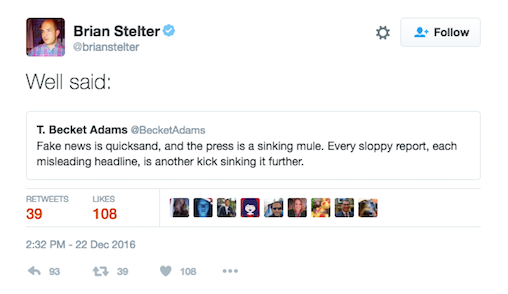
How dare Brian Stelter, so called ‘journalist’ at CNN, retweet an obvious prank by some dipshit named Adam Saleh — over what he sensationalized to be ISLAMOPHOBIA at the hands of a fine American company called Delta Airlines.
The claim by the very flamboyant and effeminate Adam Saleh was that he was merely talking a barbarous version of Arabic to his Mother, to which was met with an unrelenting form of ISLAMOPHOBIA by the employees at Delta, who quickly ferreted him off the fucking plane for obvious fears that he was about to stage a terrorist event by way of hijacking or shoe bomb detonation.
Little did the plebian employees know that Adam was just an effete member of the youtube theatre, playing tricks on the people, hoping to cash in on his adsense ads on his stupid videos. In other words, he was full of shit. A simply cursory google search would’ve produced such valuable information, something the CNN journalist named BRIAN STELTER didn’t bother to do.
Mr. Stelter didn’t bother to do a cursory search on Adam Saleh, instead opting to RETWEET his salacious story, because he’s a very dumb man — a stone aged type of person with savage qualities occupying a very low station in life. Most of the time Mr. Stelter is busy putting out stories about FAKE NEWS, while at the same time creating his own FAKE NEWS. The main stream media today is an active practice of a nonsensical nature, very Kafkaesque for you literary and Orsen Welles aficionados.
Here’s Brian making fun of himself.
The bow-tie less Tucker Carlson calls out Mr. Stelter, and the media as a whole, for being very stupid, falling for the oldest tricks in the book.
Content originally generated at iBankCoin.com
Source: TUCKER CARLSON CRUCIFIES CNN REPORTER FOR RETWEETING ADAM SALEH PRANK
By Tyler Durden

For the 3rd night in a row, China opens with a panic bid for Bitcoin. The cryptocurrency is now up over 14% in less than 3 days, topping $900 for the first time since December 2013. Interestingly yuan is not moving much tonight.
The USD price for a Bictoin has soared over 14% in the last 2 days. We first warned of this 'outlet' for Chinese capital in September 2015 when Bitcoin was trading around $200…now it is topping $900…
And volume is very heavy once again from China…
Getting very close to record highs…

As a reminder, back in 2013, the government classified bitcoin as a commodity and not currency, placing it outside the purview of the foreign-exchange regulator, the people said. That does not mean, however, that China is powerless at limiting bitcoin's upside.
Several Chinese government bodies including the People’s Bank of China and the financial regulators said in a joint notice that year that bitcoin functioned like a digital commodity without the legal status of a currency. The central bank said in January it is studying the prospects of issuing its own digital currency and aims to roll out a product as soon as possible.
While China dominates bitcoin mining and trading, the government has shown caution over its spread in the nation. In 2013, the PBOC barred financial institutions from handling bitcoin transactions.

Source: Bitcoin Soars Above $900 As China Opens
By Tyler Durden

Submitted by Brandon Smith via Alt-Market.com,
For years, alternative economic analysts have been warning that the “miraculous” rise in U.S. stock markets has been the symptom of wider central bank intervention and that this will result in dire future consequences. We have heard endless lies and rationalizations as to why this could not be so, and why the U.S. “recovery” is real. At the beginning of 2016, the former head of the Dallas branch of the Federal Reserve crushed all the skeptics and vindicated our position in an interview with CNBC where he stated:
“What the Fed did — and I was part of that group — is we front-loaded a tremendous market rally, starting in 2009.It’s sort of what I call the “reverse Whimpy factor” — give me two hamburgers today for one tomorrow. I’m not surprised that almost every index you can look at … was down significantly.” [Referring to the results in the stock market after the Fed raised rates in December.]
Fisher continued his warning (though his predictions in my view are wildly conservative or deliberately muted):
“…I was warning my colleagues, “Don’t go wobbly if we have a 10-20 percent correction at some point. … Everybody you talk to … has been warning that these markets are heavily priced.”
Here is the issue — stocks are a mostly meaningless factor when considering the economic health of a nation. Equities are a casino based on nothing but the luck of the draw when it comes to news headlines, central banker statements and algorithmic computers. Today, as Fischer openly admitted, stocks are a purely manipulated indicator representing nothing but the amount of stimulus central banks are willing to pour into them through various channels.
Even with the incredible monetary support pooled together by international financiers, returns on equities investments continue to remain mostly flat. It would seem that the propping up of indexes like the Dow has been only for the sake of keeping up appearances. For many people, revenue is barely being generated.
Unfortunately, the majority of Americans do not care to educate themselves on the finer points of finance. Their only relation to the health of the economy is their daily glance at the Dow. If it is green, or at all time highs, they assume that all is well, even if their gut is telling them something is not quite right.
The elites that stand at the helm of the Federal Reserve understand this dynamic very well. They are not stupid. They know that the whole of the global economy could be in a shambles but as long as stocks remain positive the masses will continue to ignore reality until the flames of destabilization are at their very doorsteps.
With this fact in mind one might think that the Fed would consider it in their best interest to keep stimulus measures operating indefinitely; but that is not what they are doing.
In fact, the Fed along with other central banks like the ECB has been slowly peeling back pillars …read more
Source: Federal Reserve Initiates End Game As Trump Heads To White House
Welcome to Esh Carmel Blog.



