
Archive for the ‘Uncategorized’ Category

BOJ’s Kuroda Threatens More Easing, Stocks Tank, Absurdity Reigns
By Tyler Durden

Submitted by Wolf Richter via WolfStreet.com,
“Negative interest expense” or some such absurdity yet to be coined.
“For now, the effect of negative interest rates is very strong, so we’d like to steadily proceed with this policy,” Bank of Japan Governor Haruhiko Kuroda told parliament today, to reassure the nervous politicians that the economy was on the right track under his fearless and wise leadership.
Alas, the BOJ’s “tankan” survey, released on Friday, showed that confidence plunged among manufacturers to the lowest point since 2013, while inflation expectations weakened further. The economy in the January-March quarter is likely to shrink again, after having already shrunk in the prior quarter, to form another technical recession. Despite government and BOJ exhortations, wage increases remain elusive, now an imperceptibly small 0.4% from a year ago.
But just in case the BOJ’s scorched-earth policies of negative interest rates and asset purchases – mostly Japanese Government Bonds, Japanese REITs, and equity ETFs – haven’t accomplished the desired miracles yet, the BOJ would be willing to accelerate the same failed policies, such as pushing interest rates deeper into the negative, and try some new things too, such as diving into riskier assets, he said.
But it won’t be predictable. The BOJ could mix and match the next policy steps, depending on the economy, prices, and “market moves, particularly those in Japan,” he said. At least, he’s admitting that the BOJ is slave to the financial markets.
“We won’t necessarily choose a rate cut just because it’s easier to do so,” he said. It could be anything.
Turns out, Japan Inc., which has been coddled and favored by Abenomics even more so than by prior administrations, is not investing enough in Japan despite tax incentives for investments, but instead is focusing capital investments on its projects in other countries. Capital expenditures in Japan, which would boost the economy, are lagging.
So the BOJ has kicked off yet another way to coddle and favor Japan Inc. with a special incentive: another stock market pump-up scheme that is now coming to fruition.
Back in December it promised to buy shares of ETFs that would have to be created for just this purpose. They would incorporate shares of companies that follow the BOJ’s dictum: boost wages, employment, and capital spending.
So Daiwa Asset Management in partnership with index provider MSCI will develop a special stock index for these anointed companies. Nomura Asset Management and other firms in the Nomura group plan to put their own index together. It’s up to them to decide which companies are doing what the BOJ wants them to do to the extent that they deserve being included. And the special ETFs will track those indices.
Nomura Asset Management and Daiwa Asset Management have now completed setting up their ETFs that fit this mold. On April 1, both asset managers filed applications with the Tokyo Stock Exchange for listing these ETFs. They’re expected to make their debut on the TSE in mid-May. …read more
Source: BOJ’s Kuroda Threatens More Easing, Stocks Tank, Absurdity Reigns


Walmart will switch to selling cage-free eggs only

Walmart, which accounts for 25% of the groceries sold in the U.S., will transition to selling cage-free eggs only by 2025.
Source: Walmart will switch to selling cage-free eggs only
The Nattering Naybobs Of Normalization (A Tale Of 3 Fed Heads)
By Tyler Durden

Authored by Bill Bonner of Bonner & Partners (annotated by Acting-Man.com's Pater Tenebrarum),
Leaning Into the Wind
During our lifetime, three Fed chiefs have faced a similar challenge.
Each occupied the chairman’s seat at a time when “normalization” of interest rates was in order.
Recently, we remembered William McChesney Martin, head of the U.S. Fed under the Truman, Eisenhower, Kennedy, Johnson, and Nixon administrations. Today, we compare Martin with two of his successors, Mr. Paul Volcker and Ms. Janet Yellen. We allow you to draw your own conclusion.
Punchbowl theft alert!
In 1951, the Fed and the Treasury clashed over “normalizing” interest rate policy after almost 10 years of tight control. In 1942, after the U.S. entered World War II, and at the request of the Treasury, the Fed pegged interest rates at a low level to make it easier for the government to finance the war. Come peacetime, it had to finesse a return to market-set rates.
Of course, the Fed can never fully shirk its responsibilities or ignore its influence. Its voting committee, the Federal Open Market Committee (FOMC), has the ultimate say on setting short-term rates. But its hand on the controls can be heavy… or light. It can allow the market to express itself. Or it can shut the market up and do the talking itself.
After the troops came home, Martin developed two metaphors to describe his views on central banking. The first was that the central bank should neither set rates high nor low, but instead “lean into the wind.” The idea was to moderate market forces by exerting a little counter-cyclical pressure.
If the economy were running hot, the central bank would maintain its funds rate a little higher than usual. If the economy were cooling off, it would aim for a slightly lower rate. That brings us to the second of Martin’s metaphors.
The job of the Fed, he said, was to “take away the punch bowl just as the party gets going.” In other words, raise interest rates just when the economy starts to enter an unsustainable boom.
Times Change
Mr. Martin was not necessarily less intelligent than those who succeeded him. But times change. Fashions evolve. Today, Truman’s appointee as Fed chief might as well be wearing spats.
In February 1951, the annual consumer price index, or CPI – the most common measure of inflation – was running at almost 8% a year. President Truman summoned the entire FOMC to the White House – with Martin as the principal negotiator – to extract a pledge from them to keep interest rates pegged at low levels.
But the Fed dug its heels in and refused to “maintain the existing situation.” Martin then announced that he would allow interest rates to rise. And rise they did. From just under 1% when Martin took over as Fed chief, short-term rates stood at almost 4% at the start of the 1960s.
Frontal Assault
The next …read more
Source: The Nattering Naybobs Of Normalization (A Tale Of 3 Fed Heads)
‘Economic Models’ Forecast GOP White House (With Or Without Trump)
By Tyler Durden

As The Hill reports, Republicans are expected to win the White House under two economic models that have accurately forecast presidential elections for decades. A third model run by Moody’s Analytics predicts Democrats will win the White House, in part because of President Obama’s rising approval rating.
“As economists this is a very unusual election and there’s a lot more uncertainty introduced this time around that could upset the balance and the historical relationship of how marginal voters vote,” said Dan White, an economist with Moody’s Analytics who oversees the firm’s monthly election model.
Ray Fair, a Yale professor who launched his model in 1978, told The Hill that while all elections include unruly features that an economic model can’t pick up, “this one seems particularly unusual.”
“If there’s any time in which personalities would trump the economy it would be this election,” Fair said.
Fair’s model has correctly forecast all but three presidential races since 1916 but was wrong in 2012, when it predicted a narrow loss for Obama to Mitt Romney.
It relies on just three pieces of information: per capita growth rate of gross domestic product in the three quarters before an election, inflation over the entire presidential term and the number of quarters during the term growth per capita exceeds 3.2 percent.
Given the sluggish economy, his model doesn’t show enough growth under Obama to predict a Democratic win in the election. In his most recent forecast from January, his model predicted a 45.66 percent share of the presidential vote for the Democratic candidate, less than the 49 percent it predicted in 2012.
The other two models, unlike Fair’s, consider the incumbent president’s approval rating. In both cases, Obama’s improving favorability helps his party’s chances of winning the White House. But only one of those models predicts a Democratic win.
White said that one of the most frequently asked questions he gets is whether a Trump variable could be added into the model to test out how his brand of fireworks factors in.
No way, he said.
“The model doesn’t know or care if there are two or 10 candidates,” he said. “It knows the economics and whether marginal swing voters will keep the incumbent party in or not.”
In fact, their models are designed to sweep away the effects of boisterous personalities and the usual ebbs and flows of a long presidential campaign season and instead track specific economic factors that voters deem most important.
“So the logic that says that these models should have worked over the past few decades also says that they should work in this election cycle, too,” he told The Hill.
“There's no reason to think the models should do better or worse in 2016,” he said.
Source: ‘Economic Models’ Forecast GOP White House (With Or Without Trump)
As Seen On One Billboard: The San Francisco Housing Bubble
By Tyler Durden

That San Francisco, ground zero of the second tech – this time private (and
As Marketwatch notes, real estate is so frothy in the San Francisco Bay Area that a new development in the city’s Lake Merced neighborhood felt the need to advertise its townhomes on a billboard as million-dollar deals – get in now while the price is right!
This is what the “low $1,000,000s” will buy you: a 1,547 square foot, 3-bedroom, 2-bath townhome (listed on real estate site Redfin for $1,012,000+).
Feel like hunting for better bargains? Then how about this 3-bedroom, 3.5-bathroom, 2,393 square foot townhome listed for $1,649,900+.

“You’ll take in the lifestyle of the city but leave all the limitations of San Francisco behind,” according to the development’s website. “So, when your day is done, you’ll pull into the garage, hit the button and walk into a place that’s different from the start.”
Translation: these aren’t located near the hustle and bustle. The Lake Merced area is located in the city’s southwest corner, far from downtown and other popular neighborhoods in the central parts of the city.
For some context, here’s a look at the rest of the San Francisco housing market. This shack was listed for $350,000 and sold in September 2015 for $408,000, nearly 17% above the asking price. The real-estate agent referred to the “home” as “above and beyond distressed.”
If that didn’t sufficiently impress (or exasperate) you, take a look at some listings in the city’s more central areas, which may leave you thinking “low 1,000,000s” in Lake Merced is a deal after all.
This 1-bedroom, 2-bath home is located near the baseball stadium AT&T Park. It’s 1,428 square feet and is listed for $1,950,000, plus $563.36 in monthly homeowners association dues.

This 3-bedroom, 2-bath home is located in hipster enclave Mission Dolores and is larger at 2,580 square feet. It is listed with the words “huge price reduction” for just $2,599,000.

As a reminder, according to Case Shiller, home prices in San Francisco rose 10.5% over the past year. U.S. house prices overall rose 5.7% compared with a year ago in January, or about three times more than average wages. Since 2012, median housing prices in San Francisco have more than doubled, hitting $1.225 million in February 2016, as the following dramatic charts demonstrate.


And here is the problem: to be able to purchase a house in San Francisco, a prospective buyer should make on average over quarter million dollars per year, nearly 6 times more than for the broader U.S.

Much more on the San Fran housing market in the Paradon “March 2016 San Francisco Real Estate Report”
What Bull Market?
By Tyler Durden

Submitted by Thad Beversdorf via FirstRebuttal.com,
I keep hearing that the past 6 or 7 years in equities is just part of an even longer term secular bull market. And it strikes me very curious that investors continue to pay these fee based money managers and chief market strategists who continue to sell this theory.
Let me show you a chart…
…and then provide a very brief parable for you to consider.
A man moves out to the woods and his family only eats what he catches from the lake. So on his first morning in the woods he awakens early, grabs his gear and goes fishing. After anxiously waiting most of the day he gets a fish on but then loses it before it is safely in the boat. He reels the line in and sees the hook broke. So he paddles to the marina and buys a new hook from the man who sold him the first one and then he heads back out. It is now getting late but he decides to give it one more cast and to his excitement he gets a fish on and this time gets the fish in the boat. He paddles home to show his family the supper he caught.
Now does he have one or two fish to show his family? That’s right, while he caught two fish, the first was lost, and so he has only one to feed his family. But for the guy at the marina selling poor quality hooks, he actually did profit, not from the fish but from keeping the man fishing. So perhaps it’s all about perspective. That is, are you feeding your family from actual investment gains or from scalping fees around other people’s investing?
Let’s remember the point of investment is to gain purchasing power through wealth appreciation.
So first, let’s not focus on nominal value as the above chart indicates 100% of the S&P 500 ‘gains’ since 2000 have come by way of inflation. This means the market has created exactly $0 of additional purchasing power for investors over the past 15 years. That’s right, none, zilch, nada. Want to explain that one away Zandi??
Second, let’s be honest, now I know finance is certainly not the place for honesty but let’s try. Suggesting that achieving the same market gains two separate times after having lost them the first time is somehow two separate bull markets is total nonsense unless you are profiting from the ride rather than the final destination.
Happy trading!

Source: What Bull Market?
Megyn Kelly is keeping ‘options open’
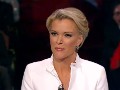
Megyn Kelly says she hasn’t decided whether she wants to stay at Fox News after her contract expires next year. “I don’t know what’s going to happen,” she says.
Source: Megyn Kelly is keeping ‘options open’
Megyn Kelly, keeping ‘options open’

Megyn Kelly says she hasn’t decided whether she wants to stay at Fox News after her contract expires next year. “I don’t know what’s going to happen,” she says.
Source: Megyn Kelly, keeping ‘options open’
Banks dismiss claims they helped hide money

Panama Papers: Global banks have rejected reports that they helped their clients hide money offshore.
Source: Banks dismiss claims they helped hide money
Welcome to Esh Carmel Blog.
Need A Job ?
Job Hunting ?
Need Help ?
CLICK HERE :
Job Hunters : How to Stand Out from the Crowd and Tap Into the Hidden Job Market
-
PLEASE NOTE: As with any precautionary warning, ALWAYS consult with your physician before taking any action in regards to your health.
This site does not provide medical or any other health care or fitness advice, diagnosis, or treatment. The site and its services are for informational purposes only and are not a substitute for professional medical or health advice, examination, diagnosis, or treatment. Always seek the advice of your physician or other qualified health professional before starting any new treatment, making any changes to existing treatment, or altering in any way your current exercise or diet regimen. Do not delay seeking or disregard medical advice based on information on this site While we try to keep the information as accurate as possible, we disclaim any implied warranty or representation about its accuracy or completeness. The reader assumes full responsibility for using the information on this site. This site is neither responsible nor liable for any claim, loss or damage resulting from the use of information on this site. This site is intended for use by adults only. Minors should use this site only with the involvement of a parent or guardian.
How to Get a Great Job in 90 Days or Less


