Best Appetite Control Supplements on Amazon


Work at Home - Generate Income from Anywhere


35 Home Based Business Startups for under $500 - Be Your Own Boss


Garcinia Cambogia with 95% HCA Weight Loss Supplement - Best Fast Acting Fat Burner and Natural Carb Blocker Diet Pills - Pure Garcinia Extract


Archive for the ‘Uncategorized’ Category

These Are The 8 Biggest Barriers To Economic Growth

Find The Lowest Price HERE


By Tyler Durden

Submitted by John Mauldin via MauldinEconomics.com,

Last month I ran across a fascinating study by economist John Cochrane. He is a senior fellow at the Hoover Institution, former University of Chicago professor, and adjunct scholar with the Cato Institute.

Cochrane wrote a paper on economic growth last year as part of a project to design presidential debate questions where he took a matter-of-fact approach to the growth problem.

What are the barriers to productivity growth, and what can we do to remove them? Not surprisingly, most barriers are the result of counterproductive government policies. I’ll highlight here a few from Cochrane’s paper.

Barrier #1: Government Interference

The government interferes in just about every segment of the economy. Sometimes it brings benefits like traffic safety and clean air. More often, regulation simply slows growth in order to transfer wealth from one group to another.

It interferes with growth by impeding competition and distorting economic incentives. It distorts the signal that individuals send markets about their preferences and adds a great deal of noise and cost, which distorts economic activity from being its most efficient.

Barrier #2: The Dodd-Frank Financial Regulations

The Dodd-Frank financial regulations had the laudable goal of preventing future bank crises, but in reality, they simply work against other government policies. Washington encourages and subsidizes debt and then tries to prevent the inevitable consequences.

We wouldn’t need Dodd-Frank if the government were not rewarding excessive debt. Excessive, unproductive debt of the type we are generating in the US and Europe actually inhibits growth.

Barrier #3: Obamacare

We’re all frustrated by Obamacare and health insurance generally. What we need is simple, portable, catastrophic health insurance. Instead of promoting it, the government makes it illegal.

Barrier #4: Energy Subsidies

Here again the government works at cross-purposes with itself. It subsidizes energy so that it costs less, then tries to prevent us from using too much of it. Cochrane says the ethanol mandate helps no one but the large corn-producing companies. Ditto for solar subsidies.

Barrier #5: Taxes

Taxes should raise revenue, but instead we use them to redistribute income and encourage/discourage behavior. A simpler tax code would remove massive economic distortions, and it would be far better to tax consumption instead of income.

Barrier #6: Income-Based Social Programs

Cochrane sees no need to be stingy with helping people in genuine need. Welfare programs are far less costly than the many subsidies we give the middle class and large corporations.

The problem is that perverse incentives trap people and make them permanently dependent. He suggests consolidating all the aid programs and making them time-based, like unemployment benefits, rather than income-based.

Barrier #7: Immigration Terms

We can end illegal immigration overnight, says Cochrane, by making it legal. The question is the terms we apply to legal …read more

Source: These Are The 8 Biggest Barriers To Economic Growth


100% Pure Garcinia Cambogia Extract – Appetite Suppressant – Carb Blocker Capsules – 2100 MG – 90 Caps

Looking for something special ? Find The Lowest Price HERE


The Stock Market Is A Monetary Policy Junkie – Quantifying The Fed’s Unprecedented Impact On The S&P

Find The Lowest Price HERE


By Tyler Durden

Stock Market As Monetary Policy Junkie

This, of course, raises the question as to what might account for the higher P/E if it isn’t interest rates. At the end of one of our recent pieces1 we speculated that the Fed might well have a role to play in a broader sense than simply its interest rate decisions. We cited the late, great Nicholas Kaldor from a paper he wrote in 1958 arguing:

Reliance on monetary policy as an effective stabilizing device would involve…a high degree of instability…in the capital market…The capital market would become far more speculative… longer run considerations of… profitability would play a subordinate role. As Keynes said, when the capital investment of a country “becomes the by-product of the activities of a casino, the job is likely to be ill-done.”

Effectively, the Fed created enormous “moral hazard” and investors have been force-fed risk assets. (Hence we have occasionally referred to this as a foie gras market.) Whilst this seemed preeminently plausible to us, we didn’t have any evidence to offer until recently.

From the belly of the beast

In a delicious stroke of irony, the idea for our approach actually stemmed from research originating at the Fed! In 2013, two economists at the New York Federal Reserve published a paper entitled “The Pre-FOMC Announcement Drift.” In this paper the economists document “large average excess returns on U.S. equities in anticipation of monetary policy decisions made at scheduled meetings of the FOMC in the past few decades” (Lucca & Moench, 2013).

In a nutshell, the authors found that significant amounts of annual stock market returns over the past 30 years were made on FOMC meeting days. What is more, the authors found that “these pre-FOMC returns have increased over time and account for sizeable fractions of total annual realized stock returns.”

The New York Fed economists utilized tick data from the stock market to aid in their explorations. They were interested in determining whether these divergences could be explained by actual new information passed on to the market after the FOMC had made its decisions or whether they were due to simple anticipation by the markets of the FOMC decisions. They concluded that the returns could not be explained by markets “pricing in” FOMC decisions.

We were less interested in this particular aspect, but the approach sparked an idea in relation to what we might call the Kaldor hypothesis, which is essentially that the Fed has had a meaningful impact on market behaviour. Rather than using tick data as the Fed researchers did, we used full-day data, but reached a very similar conclusion.

Exhibit 2 plots the S&P 500 together with an adjusted series, which shows the impact of removing the days when the FOMC was meeting. Exhibit 3 plots the same data in relative cumulative space (effectively a strategy of going long the market on days when the FOMC was meeting, and zero all the other days of the year). A cursory glance at either chart shows that sometime around 1985 …read more

Source: The Stock Market Is A Monetary Policy Junkie – Quantifying The Fed’s Unprecedented Impact On The S&P


100% Pure Garcinia Cambogia Extract – Appetite Suppressant – Carb Blocker Capsules – 2100 MG – 90 Caps

Looking for something special ? Find The Lowest Price HERE


Chinese Take Over Canada’s Real Estate Market, Buy One-Third Of All Vancouver Homes Sold In 2015

Find The Lowest Price HERE


By Tyler Durden

“Housing in Vancouver is insane — it was insane when I left and it’s more insane now.”

That’s from 33-year-old Kevin Oke, co-founder of LlamaZoo Interactive who

(a representative listing from Point Grey)

We’ve spilled quite a bit of digital ink documenting the “three-alarm fire” (to quote Bank of Montreal chief economist Doug Porter) that’s burning in British Columbia’s housing market. Here, for those who missed it, are some informative posts:

According to the Greater Vancouver Real Estate Board, residential property sales in Greater Vancouver rose 31.7% in January, 46% above the 10-year sales average for the first month of the year and the second highest January ever. The benchmark price for a detached home in Vancouver: $1,293,700. The benchmark price for an apartment: $456,600. The latest data from the Canadian Real Estate Association shows the average price of a home in Canada rose an astonishing 16% Y/Y last month to more than $500,000. Underscoring the extent to which British Columbia and Ontario are driving the market, stripping out those two provinces pulls the national average down to under $300,000.

Prices in Vancouver surged 26% in February.

So what’s behind the inexorable rise? How is it possible that “fixer uppers” like the residence shown above go for $2,500,000? It’s very simple. Chinese worried about continued market turmoil and a weaker RMB, are moving money out of the country. As CAD slid against USD, Chinese “investors” found Canadian real estate to be comparably priced vis-a-vis US real estate in USD terms. Wealthy Chinese funneled their dollars into the Canadian market, driving up prices. In short: capital flight from China has created a massive housing bubble in cities like Toronto and Vancouver. Throw in the fact that some of these locales – like Waterloo, Ontario – are becoming tech hubs, and you have the recipe for overheating markets.

Just how prevalent is Chinese buying, you ask? Well according to National Bank’s Peter Routledge who did some “back of the envelope” calculations, fully one-third of all Vancouver real estate purchased in Vancouver last year was bought by Chinese investors.

Chinese investors spent about C$12.7 billion ($9.6 billion) on real estate in the western Canadian city in 2015, or 33 percent of its C$38.5 billion in total sales,” Bloomberg writes, citing Routledge and analysts Parham Fini and Paul Poon who “extrapolated from a Financial Times survey of 77 high-end buyers and data from the U.S. National Association of Realtors.” Here’s a bit more from The Globe And Mail:

Without any Canadian-specific data on foreign investors to …read more

Source: Chinese Take Over Canada’s Real Estate Market, Buy One-Third Of All Vancouver Homes Sold In 2015


100% Pure Garcinia Cambogia Extract – Appetite Suppressant – Carb Blocker Capsules – 2100 MG – 90 Caps

Looking for something special ? Find The Lowest Price HERE


The 8 Major Problems The Next President Will Face

Find The Lowest Price HERE


By Tyler Durden

Authored by John Mauldin of MauldinEconomics.com,

Dear Donald and Hillary:

In around ten months, one of you will wake up as Mr. or Mrs. President. After the fabulous fun of post-inaugural balls, you will walk into the Oval Office on Saturday, January 22 and launch into your first 90 days in office.

During these days, you will want to deliver on as many of your promises as possible. But instead of shadowboxing with hypothetical futures on a debate stage, you’re going to be up against cold, hard reality.

My suspicion is that six months into your presidency you will begin to wonder why you ever wanted this job, as the gulf deepens and widens between what you wanted to do and what you can do without unintended consequences.

To make your job just a little more manageable, what I would like to do is take you around the world and review some of the economic realities faced by our global partners.

For many of them, those realities are not pretty. They may be far more limited in what they can do to respond to your proposed agenda than either they or you would like.

First, let’s do a quick overflight of the economic problems you will have to deal with in various regions the world.

Problem #1: Japan

Japan has run up a debt of almost 250% of GDP, and that monumental debt is growing every year. Japan’s deficit stands at nearly 8% of GDP, the equivalent of a $1.2 trillion deficit in the US.

The country’s nominal rate of GDP growth has remained almost flat for 25 years, the result of unrelenting deflation. The Japanese 10-year bond market used to be one of the most liquid in the world.

Now, if the Bank of Japan is not in the market, there is literally no trading. If the Bank of Japan were not buying bonds, interest rates would rise precipitously; and the government of Japan would be bankrupt in short order.

In order to avoid a deflationary depression, Japan is monetizing not only its deficit, but a great deal of its outstanding debt. This move has of course pushed the Japanese yen down against the dollar—by some 40% in the past few years.

The problem is that Japan has no choice but to continue down that path.

As an aside, most mainstream US economists (the very economists you will likely turn to for advice) are telling Japan that it needs to do more quantitative easing, not less. The yen is likely to become markedly weaker on your watch; and, frankly, there is very little you can do about it without sending Japan even further into recession/depression.

Such an event in Japan would have serious impacts on global growth and trade. (We’ll get into some details below as to what your options are.)

Problem #2: China

Like Japan, China has a massive debt problem. But unlike the people of Japan, the majority of China’s citizens still live in …read more

Source: The 8 Major Problems The Next President Will Face


100% Pure Garcinia Cambogia Extract – Appetite Suppressant – Carb Blocker Capsules – 2100 MG – 90 Caps

Looking for something special ? Find The Lowest Price HERE


"Core" Durable Goods Tumbles For 13th Month – Longest Non-Recessionary Stretch In 70 Years

Find The Lowest Price HERE


By Tyler Durden

Durable Goods New Orders (Ex-Transports) or so-called “Core” durable goods dropped 0.5% YoY, extending its losing streak to 13 months. This is the longest streak in the history of the series with no recession. All segments of the durable goods report saw negative MoM moves with headline down 2.8% (small beat) but preior data was revised dramatically lower, Capital goods orders were drastically revised lower but still fell more than expected (-1.8% MoM) and finally shipments ex-aircraft dropped 1.1% MoM (missing the expedcted rise of 0.3% notable) with significant downward revisions once again.

  • Durable goods new orders down -2.8%, exp. -3.0%; prior revised down to 4.2% for Jan. from 4.7%
  • New orders ex-trans. down 1%, Exp. -0.3%; prior revised to 1.2% from 1.7%
  • Capital goods orders ex-aircraft down 1.8%, Exp. -0.5%, prior revised to 3.1% from 3.4%
  • Capital goods shipments ex-aircraft down 1.1%, Exp. +0.3%, prior revised to -1.3% from -0.4%

And just like that, all the exuberant “bounce” hope has been eviscerated thanks to a broadly disappointing report, and steep downward revisions of last month's euphoric data.

As we can't tired of showing, this has never happened outside of a recession…

The headline data managed to eke out a small YoY gain..

Even as Core CapEx orders have gone nowhere for the past year.

Finally, if anyone is wondering why the dramatic downward revisions from the exuberant January data, as we explained in detail here, there was a massive seasonal adjustment that juiced all the data.

It has now been “fixed”, reducing the yuuuge awesomeness of the historical data.

…read more

Source: "Core" Durable Goods Tumbles For 13th Month – Longest Non-Recessionary Stretch In 70 Years


100% Pure Garcinia Cambogia Extract – Appetite Suppressant – Carb Blocker Capsules – 2100 MG – 90 Caps

Looking for something special ? Find The Lowest Price HERE


Brussels Suicide Bombers Planted Hidden Camera At Home Of Top Belgium Nuclear Official

Find The Lowest Price HERE


By Tyler Durden

(Tihange)

Although nearly two thirds of Belgium’s electricity comes from the sites’ seven reactors, activists want at least two reactors shuttered on safety concerns. Those concerns – stemming from the discovery of “thousands” of micro-cracks – were amplified last month when Belgium’s federal prosecutor confirmed that on November 30, police seized footage that appeared to show a high-ranking Belgian nuclear official in an anti-terror raid. The surveillance video was discovered in a bust that resulted in the arrest of Mohamed Bakkali, who was charged with terrorist activity and murder in connection with the Paris attacks. His home in Auvelais may have been used as a hideout.

Unconfirmed reports out this week suggest that Bakkali was mentioned in the will of Ibrahim el-Bakraoui, which was found on a discarded computer discovered in a trash bin following Tuesday’s attacks.

Bakraoui blew himself up outside of a Starbucks in the Brussels airport. His brother, Khalid, carried out an attack on the city’s metro just a little over an hour later.

The connections between Tuesday’s attacks and the assault on Paris are now becoming clear and as we and others have documented extensively, this all appears to stem from the cell organized and run by Abdelhamid Abaaoud, the Paris “masetermind” who allegedly became Emir of War in Deir ez-Zor after Omar the Chechen (al-Shishani) was transferred to Iraq. Indeed, the cell may be connected to the January 2015 raid in Verviers that killed two of Abaaoud’s compatriots.

On Thursday, we get still more chilling evidence to suggest that this is all the work of the very same Belgium-based terror cell. According to

As the chaos surrounding the coordinated suicide attacks on Belgium unfolded on Tuesday morning, we reported that energy utility Electrabel was evacuating two nuclear power plants, Doel, made up of four reactors, and Tihange, comprised of three.

Electrabel would later dispute that account, drawing a distinction between a full evacuation and the utility’s generous offer to non-essential employees: “…people who are not strictly necessary on site can leave.”

#Tihange nuclear powerplant – people who are not strictly necessary on site can leave #security measures

— Electrabel (@Electrabel) March 22, 2016

Yay, a day off. It’s kind of like when you’re a kid and you get sent home from school early because it’s snowing. Only with terrorists. And three dozen casualties.

But the presence of military personnel belied Electrabel’s attempts to play down the incident.

The stepped up police and army presence certainly seemed to suggest that the threat to Belgium’s crumbling nuclear infrastructure was very real indeed. We say “stepped up” because there were already 140 soldiers at the Tihange and Doel sites, which host 40-year old reactors that The Guardian notes have “been plagued by a litany of problems such as pressure vessel micro-cracks, fire and one mysterious case of sabotage.”

(Tihange)

Although nearly two thirds of Belgium’s electricity comes from the sites’ seven reactors, activists want at least two reactors shuttered on safety concerns. Those concerns – stemming from the discovery of “thousands” of micro-cracks – were amplified last month when Belgium’s federal prosecutor confirmed that on November 30, police seized footage that appeared to show a high-ranking Belgian nuclear official in an anti-terror raid. The surveillance video was discovered in a bust that resulted in the arrest of Mohamed Bakkali, who was charged with terrorist activity and murder in connection with the Paris attacks. His home in Auvelais may have been used as a hideout.

Unconfirmed reports out this week suggest that Bakkali was mentioned in the will of Ibrahim el-Bakraoui, which was found on a discarded computer discovered in a trash bin following Tuesday’s attacks.

Bakraoui blew himself up outside of a Starbucks in the Brussels airport. His brother, Khalid, carried out an attack on the city’s metro just a little over an hour later.

The connections between Tuesday’s attacks and the assault on Paris are now becoming clear and as we and others have documented extensively, this all appears to stem from the cell organized and run by Abdelhamid Abaaoud, the Paris “masetermind” who allegedly became Emir of War in Deir ez-Zor after Omar the Chechen (al-Shishani) was transferred to Iraq. Indeed, the cell may be connected to the January 2015 raid in Verviers that killed two of Abaaoud’s compatriots.

On Thursday, we get still more chilling evidence to suggest that this is all the …read more

Source: Brussels Suicide Bombers Planted Hidden Camera At Home Of Top Belgium Nuclear Official


100% Pure Garcinia Cambogia Extract – Appetite Suppressant – Carb Blocker Capsules – 2100 MG – 90 Caps

Looking for something special ? Find The Lowest Price HERE


U.S. Futures Slide, Crude Under $39 As Dollar Rallies For Fifth Day

Find The Lowest Price HERE


By Tyler Durden

Following yesterday’s dollar spike which topped the longest rally in the greenback in one month, the prevailing trade overnight has been more of the same, and in the last session of this holiday shortened week we have seen the USD rise for the fifth consecutive day on concerns the suddenly hawkish Fed (at least as long as the S&P is above 2000) may hike sooner than expected, which in turn has pressured WTI below $39 earlier in the session, and leading to weakness across virtually all global risk assets.

And since a stronger dollar means a weaker Yuan, more potential devaluation, greater capital outflows but most importantly lower commodity prices and key among them cheaper oil, now flirting with sliding below $39 to the downside, which would lead to its first weekly decline, as lower oil means lower risk prices in general as per the very well-known correlation shown below…

… traders walking in today are greeted by something they have barely seen in the past month’s bear market rally: a sea of red: not only are S&P500 futures down nearly 0.5% in today’s illiquid session, but European shares have retreated for a fourth day, while raw-materials producers led declines among Asian equities as the Bloomberg Commodity Index slumped for a second day. Industrial commodities like iron ore fell for a third day, while gold has continued to drift lower. Government bonds advanced in Australia and the euro area.

The reason for this resurgent dollar streanth is none other than the very confused Fed: after last week halving its projection for interest-rate rises this year to two – a shift that spurred global stock gains and depressed the dollar – various Fed officials have in the past few days talked up the possibility of an increase something that CNBC’s Steve Liesman classified as a potential mutiny against a very confused Janet Yellen. As Bloomberg writes, Fed Bank of St. Louis President James Bullard on Wednesday joined a chorus of policy makers floating the possibility of a rate hike as soon as April, helping fuel a rebound in the greenback that’s unsettling the mostly dollar-denominated commodity market.

“Fed officials this week reminded the market that they still want to move forward with the rate hikes,” Mark Lister, head of private wealth research at Craigs Investment Partners told Bloomberg.

“Investors have been looking for a reason to pull back and this is one” he added and sure enough, the MSCI All Country World Index fell 0.5% in early trading after sliding 0.8 percent on Wednesday. The Stoxx Europe 600 Index slid 0.8%, the MSCI Asia Pacific Index lost 1.1% and futures on the Standard & Poor’s 500 Index declined 0.5%.

Additionally, now that the broader market levitation appears to be over, we have seen numerous single-name slams overnight, such as the following:

Chang and Eng – The US and Canada

Find The Lowest Price HERE


By Sprott Money

Chang and Eng – The US and Canada

Chang and Eng were the first internationally known “Siamese twins”, as a result of their having been exhibited worldwide. Although each had a complete body, they were joined together at the sternum.

In 1870, Chang suffered a stroke and his health deteriorated over the next four years. In 1874, at age sixty-two, he developed bronchitis and died. His brother Eng realised immediately that his continued attachment to his brother meant that he was next. Although he was separated from his twin in an emergency operation, Eng died hours later. He left the problem too long and paid with his life.

Just as with Siamese twins, it’s a risky proposition for one country to have too much dependency on another. If a visitor to Uruguay were to visit a supermarket and examine the origin of the products by reading labels, he would find that Uruguay produces 90% of the food it consumes. In Cuba, however, we read the labels on packaging and see that the great majority of packaged foods comes from Mexico. This suggests that, should food production diminish in Mexico, or should there be political turmoil or shipping problems, Cuba could face significant problems in feeding its people.

A similar problem exists in Canada. Roughly 70% of Canada’s export product is sold to the US, whilst over 60% of its imports come from the US. Of particular concern is oil. The Canadian oil industry cannot survive without the US, as over 99% of its oil production is shipped there. Unless oil returns to a level over $60/bbl fairly soon (don’t hold your breath), and the US doesn’t stop dithering over the pipeline issue, not only will Canadian jobs and oil sales suffer, but entire companies are likely to fail.

Regarding banking, Canadians take pride in their system and rightfully so, as Canadian banks have been nowhere near as cavalier as American banks in recent history. However, without transfers between the two countries (particularly between New York and Toronto), their banks would quickly find themselves in peril. If the US were to find itself in an economic crisis, as appears likely, Canada’s banks would also be in crisis.

In 2007, the US experienced a collapse in its real estate market. Many Canadians felt that they were in better shape, as they did not experience a similar collapse. Unfortunately, though, the Canadian housing bubble continued to grow. Over the last ten years, inflation-adjusted residential real estate prices inCanada have increased by 49.3%, whilst US and EU numbers have gone down. House buyers in Vancouver, Calgary and Toronto are way overdue for a major fall. All that would be needed would be a rise in interest rates to prick the bubble. (Canadian Real Estate values must decline by 35.1% just to be equal to the US.)

Other sectors of the economy, however, have already taken …read more

Source: Chang and Eng – The US and Canada


100% Pure Garcinia Cambogia Extract – Appetite Suppressant – Carb Blocker Capsules – 2100 MG – 90 Caps

Looking for something special ? Find The Lowest Price HERE


CRuZ APPoiNTS SuBPRiMe DouCHe BaG To Be CHieF ECoNoMiC ADViSoR…

Find The Lowest Price HERE


By williambanzai7

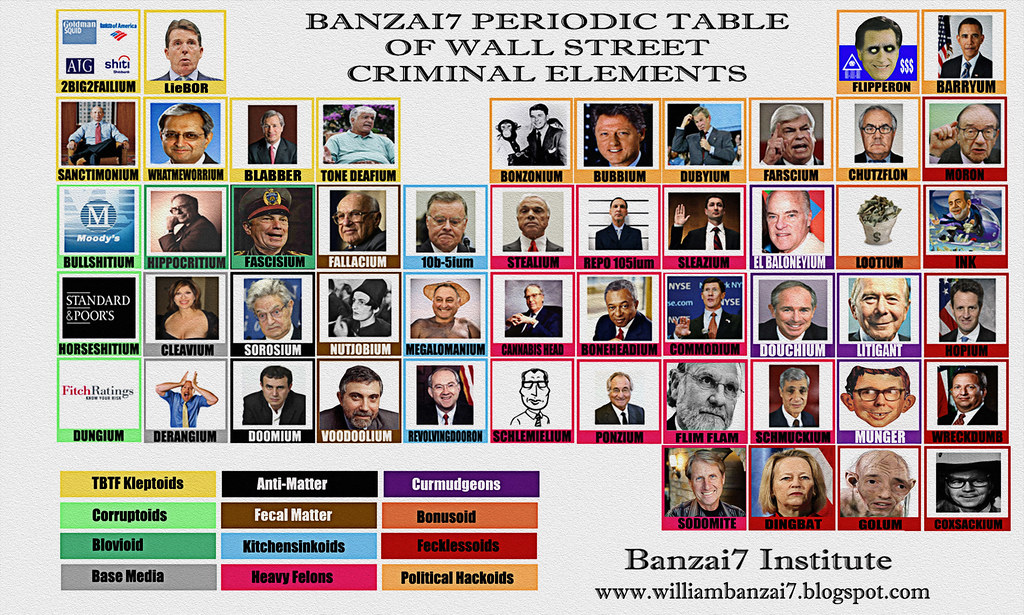
PERIODIC TABLE OF WALL STREET CRIMINAL ELEMENTS FINE ART PRINT

Connect the Shiti dots…

.

.

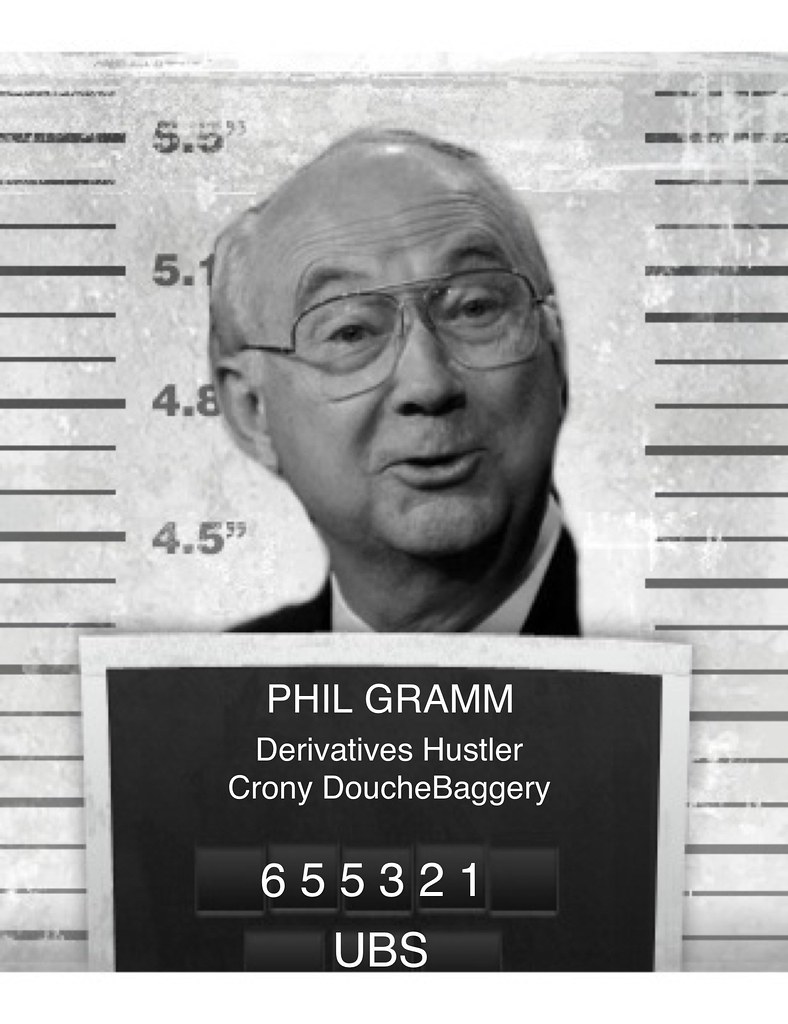
GRAMM FELON

.
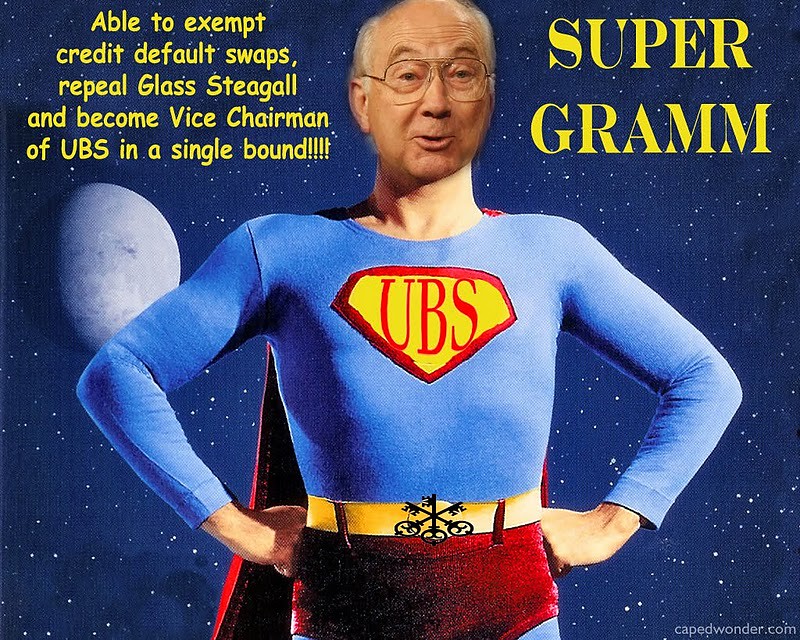
SUPER GRAMM

.
MENAGE A TBTF (Pop Version) (Gramm, Rubin, Sandy Weill)

.
JACKPOT GRAMM

.
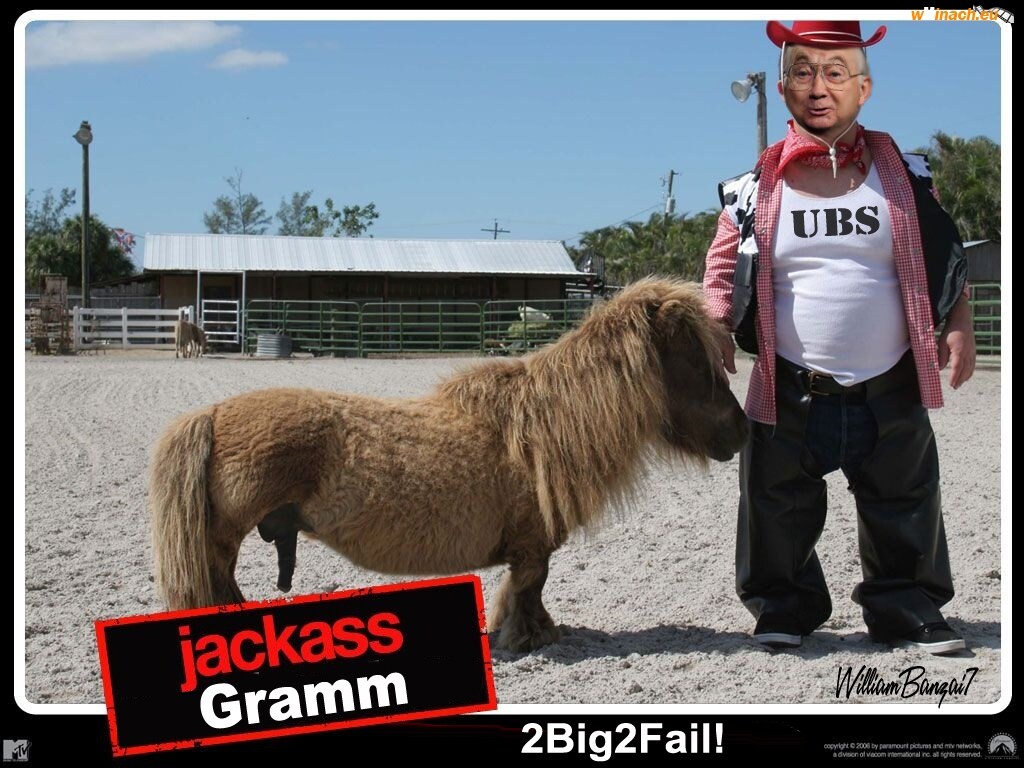
JACKASS GRAMM

…read more

Source: CRuZ APPoiNTS SuBPRiMe DouCHe BaG To Be CHieF ECoNoMiC ADViSoR…


100% Pure Garcinia Cambogia Extract – Appetite Suppressant – Carb Blocker Capsules – 2100 MG – 90 Caps

Looking for something special ? Find The Lowest Price HERE


China Sends Fed A Warning: Devalues Yuan By Most In 2 Months

Find The Lowest Price HERE


By Tyler Durden

With the USD Index stretching to its longest winning streak of the year, jawboned by numerous Fed speakers explaining how April is ‘live’ (and everyone misunderstood the dovishness of Yellen), it appears that The PBOC wanted to send a message to The Fed – Raise rates and we will unleash turmoil on your ‘wealth creation’ plan. Large unexpected Yuan drops have rippled through markets in recent months spoiling the party for many and tonight, by devaluing the Yuan fix by the most since January 7th, China made it clear that it really does not want The Fed to hike rates and cause a liquidity suck-out again.

The last 4 days have seen nearly a 1% devaluation in the Yuan fix with today’s drop the biggest in over 2 months…

And while everyone is quietly commenting on how “stable” the Yuan has been this year, the truth is that is only the case against the USD, the Yuan basket has been consistently devaluing since PBOC admitted it was more focused on that than the USD only…

The last time they sent a message, The Fed rapidly acquiesced and decided a rate hike was inadvisable due to global market turmoil… we wonder what happens this time.

…read more

Source: China Sends Fed A Warning: Devalues Yuan By Most In 2 Months


100% Pure Garcinia Cambogia Extract – Appetite Suppressant – Carb Blocker Capsules – 2100 MG – 90 Caps

Looking for something special ? Find The Lowest Price HERE


1 or more persons associated with this website : http://eshcarmel.org are participants in the Amazon Services LLC Associates Program, an affiliate advertising program designed to provide a means for blogs and websites to earn advertising fees by advertising and linking to amazon.com -- Compensation Disclaimer : Some of the links on this site will earn a commission when a person makes a purchase through our links. Every effort has been made to remain fair, accurate, and unbiased. Also see our FTC Disclaimer page.