
Archive for the ‘Uncategorized’ Category
10 weirdest job interview questions

A new survey from Glassdoor exposes some of the oddest questions employers are asking potential hires.
Source: 10 weirdest job interview questions


FBI says it cracked iPhone without Apple’s help
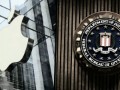
The Department of Justice has broken into the phone used by a San Bernardino terrorist without the help of Apple. The FBI says it “no longer requires the assistance from Apple.”
Source: FBI says it cracked iPhone without Apple’s help
Top German Journalist Admits Mainstream Media Is Completely Fake: "We All Lie For The CIA"
By Tyler Durden

With the increasing propaganda wars, we thought a reminder of just how naive many Westerners are when it comes to their news-feed. As Arjun Walia, of GlobalResearch.ca, notes, Dr. Ulfakatte went on public television stating that he was forced to publish the works of intelligence agents under his own name, also adding that noncompliance with these orders would result in him losing his job.
He recently made an appearance on RT news to share these facts:
I’ve been a journalist for about 25 years, and I was educated to lie, to betray, and not to tell the truth to the public.
But seeing right now within the last months how the German and American media tries to bring war to the people in Europe, to bring war to Russia — this is a point of no return and I’m going to stand up and say it is not right what I have done in the past, to manipulate people, to make propaganda against Russia, and it is not right what my colleagues do and have done in the past because they are bribed to betray the people, not only in Germany, all over Europe.
It’s important to keep in mind that Dr. Ulfakatte is not the only person making these claims; multiple reporters have done the same and this kind of truthfulness is something the world needs more of.
One (out of many) great examples of a whistleblowing reporter is investigative journalist and former CBC News reporter Sharyl Attkisson.
She delivered a hard-hitting TEDx talk showing how fake grassroots movements funded by political, corporate, or other special interests very effectively manipulate and distort media messages.
Another great example is Amber Lyon, a three-time Emmy award winning journalist at CC, who said that they are routinely paid by the US government and foreign governments to selectively report and even distort information on certain events. She has also indicated that the government has editorial control over content.
Ever since Operation Mockingbird, a CIA-based initiative to control mainstream media, more and more people are expressing their concern that what we see in the media is nothing short of brainwashing.
This is also evident by blatant lies that continue to spam the TV screen, especially when it comes to topics such as health, food, war (‘terrorism‘), poverty, and more.
Things have not changed, in fact, when in comes to mainstream media distorting information and telling lies. They have gotten much worse in recent years, in fact, so it is highly encouraging that more people are starting to see through these lies, even without the help of whistleblowers like Dr. Ulfakatte.
One great example is the supposed ‘war on terror,’ or ‘false flag terrorism.’ There are evenWikileaks documents alluding to the fact that the United States government planned to “retaliate and cause pain” to countries refusing GMOs.
Mainstream media’s …read more
Source: Top German Journalist Admits Mainstream Media Is Completely Fake: "We All Lie For The CIA"
Corporate Debt Defaults Explode To Catastrophic Levels Not Seen Since The Last Financial Crisis

If a new financial crisis had already begun, we would expect to see corporate debt defaults skyrocket, and that is precisely what is happening. As you will see below, corporate defaults are currently at the highest level that we have seen since 2009. A wave of bankruptcies is sweeping the energy industry, but it isn’t just the energy industry that is in trouble. In fact, the average credit rating for U.S. corporations is now lower than it was at any point during the last recession. This is yet another sign that we are in the early chapters of a major league economic crisis. Yesterday I talked about how 23.2 percent of all Americans in their prime working years do not have a job right now, but today I am going to focus on the employers. Big corporate giants all over America are in deep, deep financial trouble, and this is going to result in a tremendous wave of layoffs in the coming months.
We should rejoice that U.S. stocks have rebounded a bit in the short-term, but the euphoria in the markets is not doing anything to stop the wave of corporate defaults that is starting to hit Wall Street like a freight train. Zero Hedge is reporting that we have not seen this many corporate defaults since the extremely painful year of 2009…
While many were looking forward to the weekend in last week’s holiday-shortened week for some overdue downtime, the CEOs of five, mostly energy, companies had nothing but bad news for their employees and shareholders: they had no choice but to throw in the towel and file for bankruptcy.
And, as Bloomberg reports, with last week’s five defaults, the 2016 to date total is now 31, the highest since 2009 when there were 42 company defaults, according to Standard & Poor’s. Four of the defaults in the week ended March 23 were by U.S. issuers including UCI Holdings Ltd. and Peabody Energy Corp., the credit rating company said.
And by all indications, what we have seen so far is just the beginning. According to Wolf Richter, the average rating on U.S. corporate debt is already lower than it was at any point during the last financial crisis…
Credit rating agencies, such as Standard & Poor’s, are not known for early warnings. They’re mired in conflicts of interest and reluctant to cut ratings for fear of losing clients. When they finally do warn, it’s late and it’s feeble, and the problem is already here and it’s big.
So Standard & Poor’s, via a report by S&P Capital IQ, just warned about US corporate borrowers’ average credit rating, which at “BB,” and thus in junk territory, hit a record low, even “below the average we recorded in the aftermath of the 2008-2009 credit crisis.”
What all of this tells us is that we are in the early stages of an absolutely epic financial meltdown.
Meanwhile, we continue to get more indications that the real economy is slowing down significantly. According to the Atlanta Fed, U.S. …read more
Source: Corporate Debt Defaults Explode To Catastrophic Levels Not Seen Since The Last Financial Crisis
Saudis To "Modernize" Economy As Interbank Rates Surge & Money Supply Collapses At Record Pace
By Tyler Durden

For the first time since January 2009, 12-month Saudi interbank rates have breached 2.00% – double the 1% lows of August.
This 'stress' is also evident in the record pace of collapse of Saudi money-supply.
While Riyal forwards have rallied back from extreme bets on devaluation, they remain concerning for Saudi officials who to undertake some deep and fundamental changes to their economy, reforms that no amount of browbeating from organizations like the IMF could induce.

As OilPrice.com's Nick Cunningham details, a new report from The Atlantic Council finds that the extensive decline in oil revenues is focusing minds in Riyadh. The fiscal pressure is forcing “the kingdom’s leadership to modernize the economy,” the report concludes.
Saudi Arabia ran a fiscal deficit of about $98 billion in 2015, a figure that will decline only slightly to $87 billion this year. That deficit total is also probably closer to $120 billion in reality though, given that the costs from the war in Yemen were not included.
The fiscal squeeze is forcing some changes. First, the Saudi government is looking at new taxes, including a 5 percent value added tax (VAT). That may seem like a run-of-the-mill austerity measure, but for Saudi Arabia it is a novel proposal: it will be the first tax imposed in the country.
More to the point, the VAT is illustrative of where Saudi Arabia is heading. The Atlantic Council argues that the kingdom is starting to reform its economy in fundamentally positive ways. Low oil prices are forcing it to rely more upon taxes and less on oil revenues. That would start to make Saudi Arabia less of a “rentier state,” a country that has no need to build much of an economy because resource extraction is so lucrative. Rentier states often suffer from greater corruption and a deeper lack of responsiveness to the needs of the public, since abundant oil revenues mean that the government does not need revenue from its populace.
Another major shift in Saudi Arabia could be the partial privatization of Saudi Aramco. Prince Mohammed bin Salman made news in early January when he told The Economist that the government was mulling over such a step. There has been a lot of speculation about why an IPO would be staged. Transparency appears to be a top concern. While Aramco routinely publishes operational data, detailing production figures, shipments, and downstream activity, the company reveals very little about its finances. “The most likely explanation for Saudi Aramco’s lack of financial transparency is that it wants to hide how much money is siphoned off to the royal family,” The Atlantic Council report suggests.
By privatizing some Aramco assets (likely downstream) and cleaning up and publishing data from the company’s books, the Saudi government apparently is showing some recognition that its relationship with the public must change. “Naturally, the royal family is unlikely to find itself cut off …read more
Source: Saudis To "Modernize" Economy As Interbank Rates Surge & Money Supply Collapses At Record Pace
N.C. trade show: Bathroom law is bad for business

Officials from North Carolina’s massive High Point furniture expo that brings billions of dollars to North Carolina’s economy each year said Monday that the state’s new anti-LGBT bathroom law is threatening its business.
Source: N.C. trade show: Bathroom law is bad for business
NY could be next to pass a $15 state minimum wage
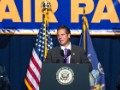
New York State Gov. Andrew Cuomo’s proposal for a $15 minimum wage statewide is still being mulled by Albany lawmakers in their last-minute negotiations over the state budget. Businesses upstate are worried.
Source: NY could be next to pass a $15 state minimum wage
U.S. Lifted The Crude Oil Export Ban, And Exports Went… Down
By Tyler Durden

Submitted by Charles Kennedy via OilPrice.com,
Just over three months after the authorities lifted the four-decade ban on crude oil exports, the U.S. has actually exported less this year than it did over the same period the year before, when the ban was still in place.
According to Clipper Data market intelligence cited by the Financial Times, we’ve seen a 5 percent decline in U.S. crude oil export volumes since the beginning of this year. The data suggests that on average we are exporting (waterborne) 325,000 barrels per day now, compared to 342,000 barrels per day during the first months of 2015.
And there’s no official data yet—not since the beginning of this year, when the U.S. Energy Information Administration (EIA) noted that during the week ending 22 January, the U.S. had exported just shy of 400,000 barrels of oil, which again was 25 percent less than what was exported for the same week in 2014.
An oil tanker that reached a French port in January was the first post-ban delivery of U.S. crude oil, but things haven’t really picked up pace since then.
January’s cargoes, totaling about 11.3 million barrels, marked a 7 percent decline from U.S. crude exports in December, according to data by the U.S. Census Bureau. Shipments during January went to Curacao and France, in addition to Canada, the primary destination. The total number of tankers that have set sail with U.S. crude oil will not be known until comprehensive data on February’s shipments is released by the U.S. Census Bureau.
The immediate beneficiaries of the ban suspension are gas and oil companies such as Chevron and Exxon Mobil—among the most tireless lobbyers against the ban—and oil trading giants such as Vitol Group BV and Trafigura Ltd Pet.
Europe and Asia are flooded with oil from Russia and the Middle East, though the first two shipments to leave the U.S. post-export ban went to Europe: one to Germany and the other to France, to be used in a refinery in Switzerland. Dutch media outlets reported in January that a tanker from Houston had reached Rotterdam port, but this remains just a drop in the global export bucket.
In Asia, even China’s state-run Sinopec—the world’s second-largest refiner—has imported a consignment of U.S. oil, according to a Reuters source. Japan's Cosmo Oil was the first Asian buyer of U.S. oil, purchasing some 300,000 barrels of U.S. crude in mid-January, which will be delivered to its refineries in mid-April.
The very first South American country that will import U.S. crude oil is Venezuela. In early February, Venezuela’s state-run oil company PDVSA imported a 550,000-barrel cargo of West Texas Intermediate (WTI) through its U.S.-based Citgo Petroleum affiliate. Venezuela started importing foreign crudes in 2014 amid a fall in its own production – buying mostly Angolan and Nigerian light grades.
WTI is also expected to be exported to Israel, where Swiss commodities house Trafigura will ship some 700,000 barrels. Atlantic Trading & …read more
Source: U.S. Lifted The Crude Oil Export Ban, And Exports Went… Down
An Investor’s Compendium Of Wall Street Wisdoms
By Tyler Durden

Submitted by Lance Roberts via RealInvestmentAdvice.com,
Over the last 30-years, I have endeavored to learn from my own mistakes and, trust me, I have paid plenty of “stupid-tax.” However, it is only from making mistakes, that we learn how to become a better investor, advisor or portfolio manager.
In the media, there is a select group of investors and portfolio managers that are revered for the knowledge and success. While we idolize these investors for their respective “genius,” we can also save ourselves time and money by learning from their wisdom and their experiences. That wisdom was inherited, but was birthed out of years of mistakes, miscalculations and trial-and-error. Most importantly, what separates these individuals from all others was their ability to learn from those mistakes, adapt, and capitalize on that knowledge in the future.
Experience is an expensive commodity to acquire, which is why it is always cheaper to learn from the mistakes of others.
Importantly, you will notice that many of the same lessons are repeated throughout. This is because there are only a few basic “truths” of investing that all of the great investors have learned over time. I hope you will find the lessons as beneficial as I have over the years.
12 Market Wisdoms From Gerald Loeb
1. The most important single factor in shaping security markets is public psychology.
2. To make money in the stock market you either have to be ahead of the crowd or very sure they are going in the same direction for some time to come.
3. Accepting losses is the most important single investment device to insure safety of capital.
4. The difference between the investor who year in and year out procures for himself a final net profit, and the one who is usually in the red, is not entirely a question of superior selection of stocks or superior timing. Rather, it is also a case of knowing how to capitalize successes and curtail failures.
5. One useful fact to remember is that the most important indications are made in the early stages of a broad market move. Nine times out of ten the leaders of an advance are the stocks that make new highs ahead of the averages.
6. There is a saying, “A picture is worth a thousand words.” One might paraphrase this by saying a profit is worth more than endless alibis or explanations. . . prices and trends are really the best and simplest “indicators” you can find.
7. Profits can be made safely only when the opportunity is available and not just because they happen to be desired or needed.
8. Willingness and ability to hold funds uninvested while awaiting real opportunities is a key to success in the battle for investment survival.-
9. In addition to many other contributing factors of inflation or deflation, a very great factor is the psychological. The fact that people think prices are going to advance or decline very much contributes to …read more
Source: An Investor’s Compendium Of Wall Street Wisdoms


